Sunday, August 25, 2013

Creativity - the most important leadership quality

In times of Speed-to-Market & Agility we cannot rely on yesterday’s ideas, products and ways of working. Today’s leaders in order to improve performance need to stimulate creative thinking and unleash the creative potential in themselves and in their teams. Creative leaders are more prepared to break with the status quo of industry, enterprise, and revenue models.

“Great is the human who has not lost his childlike heart”

— Mencius (Meng-Tse), 4th century BCE


The best-known creativity techniques are:
  • Osborn’s brainstorming (1963)
  • Altshuller’s theory of inventive problem solving (TRIZ: 1996, 1998)
  • De Bono’s lateral thinking (1967)

Jill Nemiro, author of "Creativity in Virtual Teams: Key Components for Success", and "The Handbook of High-Performance Virtual Teams", and co-editor of "The Collaborative Work Systems Fieldbook" classifies creative techniques into two categories:

1. Linear approaches (for idea generation; provide a structure to seek and find alternative solutions)


  • Attribute Listening (go beyond what is typical). Attribute Listing focuses on the attributes of an object, seeing how each attribute could be improved. Break the product/process into parts, identify ways of improving each of them, and then bring these modification to create a new product/process.
  • Morphological Synthesis. Morphological Synthesis or Analysis uses the same basic technique as Attribute Listing, but is used to create a new product by mixing components in a new way.
  • Force Fields Analysis (identifying the forces that may drive or resist a proposed change)
  • Mind Mapping
  • Idea checklist
  • Brainstorming

2. Intuitive approaches (help individuals or groups in achieving an inner state of calmness when new ideas might appear)
  • Imagery - symbols, scenes, images, “using all the scenes to recreate or create an experience in the mind” (Vealey & w\Walter, 1993)
  • Analogical Thinking (Ex: Pringles Potato Chips came from analogy of wet leaves, which can be stacked one on the top of the other without being damaged)
  • Drawing
  • Meditation. Some people swim or go for a walk. I like going for a walk on my own to the forest next to my house– usually take a note book and a pen and write down the ideas that come to my mind. 


In the interview Jill answers the questions which of these techniques are her personal favorites, and why?

Jill Nemiro: I'd have to pick three, for different reasons. I really love brainstorming because it is a great way to get a team started on the path of coming up with ideas. It is exciting to be a part of a good brainstorming session, because of the synergy and building of ideas that evolves. If these sessions are run correctly, with deferment of judgment of ideas at the onset, then the "sky's the limit" in terms of the kinds of ideas that can be generated.

Mind mapping is another favorite technique of mine, because I am a very visual person. I like to see ideas, and how they connect and build on other ideas. A mind-map allows you to see this in a graphic format.
And lastly, force-field analysis is a technique that I have used personally to work my way through some difficult challenges. By focusing on a particular challenge, outlining the positive factors pushing you toward the ideal and the negative factors hindering you from that ideal, and then developing actions to strengthen the positive factors and weaken the negative factors, it gives an individual or a team a way to develop concrete action plans to work through challenging situations.


Three Must-Haves for Team Creativity. 3 tips from Teresa Amabile interviewed by Daniel Goleman: 
1. Autonomy
Agile teams take “hack” days to promote learning and innovation. Very often teams are encouraged to spend roughly 10 -20 % of their time on “hack” days. During “hack” days people do whatever they want, typically trying out new ideas.

2. Resources
“…people will be more creative in finding resources but not necessarily in solving the actual problems. It’s important to make sure that people have the necessary information, funding and materials to do their work.”

3. Time
“… people are more creative when they have a little bit of time to explore a problem, reflect on what they're doing, gather new information, and to talk to people who might have different perspectives, which can be enormously useful.”
 
Weird Things To Boost Your Creativity 

  • Go and work from a coffee shop from time to time
  • Listen to your favorite music
  • Switch to dim light mode
  • Fight routine
  • Whatever you think, think the opposite
  • Daydream. Interested in creating your dream map? Read my post on this.
And finally let me share Gdansk’s 10 Ways of Unleashing Creativity:
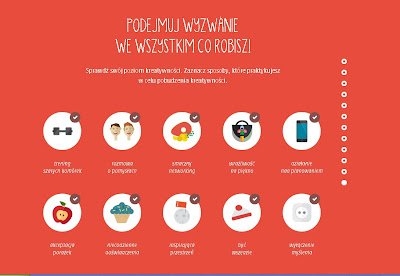

Gdansk's 10 Ways of Unlashing Creativity

1.     Join Creative Morning meetings to train your brain!
2.     Talk about your ideas – meet inspiring people to change ideas!
3.     Every day eat lunch with different person!
4.     Be sensitive for beauty – meet new artists and buy artistic/well designed stuff!
5.     Stop planning start acting – take part in contests!
6.     Accept failures – learn from them and never give up!
7.     Everyday do something unusual – do you remember Jim Lawless’ rule 7: Do something scary every day!
8.     Create an inspiring environment – for example: decorate one wall in the office with quotations and pictures!
9.     Be there is worth being!
10.  Take a break – go for a walk!

For virtual teams use special designed software programs or interactive whiteboards.


Sunday, August 18, 2013

Successful Teams Across Borders – PART 4 – Key Ingredients for Effective Virtual Collaboration.

Having strong relationships, trust, and shared understanding result in a high level of collaboration.
Source: Adapted from "The Handbook of High-Performance Virtual Teams" 

What is collaboration?
According to Wikipedia definition “Collaboration” is working with each other to do a task. It is a recursive process where two or more people or organizations work together to realize shared goals, (this is more than the intersection of common goals seen in co-operative ventures, but a deep, collective, determination to reach an identical objective — for example, an endeavour that is creative in nature—by sharing knowledge, learning and building consensus. Most collaboration requires leadership, although the form of leadership can be social within a decentralized and egalitarian group. In particular, teams that work collaboratively can obtain greater resources, recognition and reward when facing competition for finite resources

TRUST – A SUBSTITUTE FOR CONTROL
Trust is important for every cooperation, but even more critical when working virtually. Do you know that a small increase in trust of management is similar to receiving a 36% pay increase. And if the same amount of trust is lost, the decline in employee job satisfaction is similar to taking 36% pay cut! (Heliwell &Huang, 2005).

Trust can be divided into the following categories:
Cognitive Based (someone has the skills/competency, so we trust him).
Institution Based (trust in organisation we are a part of - we believe in norms & share the same values).
Personality Based (individual’s disposition to trust. For example I trust until I’m proven wrong)

TRANSACTIONAL TRUST – the foundation for virtual collaboration!

Transactional trust is mutual in nature (you have to give it to get it) and created step by step over time. There are 3 types of transactional trust:
Ø  Contractual. The team members understand what is expected from them, roles and responsibilities are clear, commitments are kept or renegotiated.
Ø  Communication. Trust and communication are closely related. Sharing information, telling the truth, speaking with good purpose.
Ø  Competence. We believe in the team members’ skills and competences and allow to make decisions. Leaders help the team to learn new skills

Contractual trust outlines the directions, determine roles and responsibilities, and helps make expectations clear. Communication trust helps define standards for information flow, sharing information, giving/receiving feedback. Competence trust allows team members develop skills/competences, including the virtual collaboration skills. Communication, particularly meaningful dialogue among members, may be the most effective tool that organisations can rely on to build trust in virtual teams (Holton, 2001).

SHARED UNDERSTANDING
We become more accountable only when we understand how our work contributes to the end result. Similar to developing trust communication is a key tool in developing a shared understanding.

DEPTH OF RELATIONSHIPS 
Challenge: lack of personal interaction, face-to-face time is critical!
Sharing personal information creates a feeling of inclusion. Relationships are based on reputation or familiarity. Working virtually requires trust and to trust we need to know one another, that’s why it’s crucial we spend some time on sharing the information and getting know one another as it does not happen as it does in a face-to-face environment!
.                                                              
TIPS:
  • Create Face- to-face opportunities or face-to face substitute – telepresence /videoconferencing
  • Share personal information – example team members interviews
  • Build/maintain relationships
  • Create a forum for open dialogue – ex: FB-like space for both  task and personal-related communication
  • Educate on virtual collaboration
  • Ensure that you are comfortable raising issues and giving feedback
  • Deal with conflict right away and focus on problem not person
  • Experiment with different ways of staying in contact
  • Make it easy for your team to contact you
  • Spend time learning about team members’ personalities, cultural backgrounds, and work habits
  • Select appropriate technology
  • Understand the cultural differences


For more read Karen Cator’s article where she shares her key strategies how to  “create a culture that enables people to connect individually and emotionally to the organization’s goals while connecting socially and positively with each other as the way to achieve them.”

Saturday, July 13, 2013

What makes a GREAT Project Manager and how to build leadership skills?

I was asked by Project World & World Congress for Business Analysts organizers two questions (full interview will be published on PW&WCBA Blog soon.


1.   What are characteristics of a GREAT project manager?
   2.    How do you as a project manager build leadership skills?


So what makes a great Project Manager? Projects are people not equipment or PERT diagrams, so for me the most important competency of a great PM is people focus. A great Project Manager builds relationships, is interested in others’ success. He or she is emotionally intelligent, gives positive and constructive feedback, coach and teach other to perform their best, is exceptional communicator and listener and provide formal and informal recognition.

I agree with Daniel Goleman, that emotional intelligence is crucial and “without it, a person won’t make a great leader". "I have found, however, that the most effective leaders are alike in one crucial way: They all have a high degree of what has come to be known as emotional intelligence. It’s not that IQ and technical skills are irrelevant. They do matter, but mainly as “threshold capabilities”; that is, they are the entry-level requirements for executive positions. But my research, along with other recent studies, clearly shows that emotional intelligence is the sine qua non of leadership. Without it, a person can have the best training in the world, an incisive, analytical mind, and an endless supply of smart ideas, but he still won’t make a great leader”. More in HBR article “What makes a leader?”.

IBM study (already mentioned in one of my article) reveals that creativity is the most important leadership quality followed by integrity and global thinking  (1500 corporate leaders, from 60 nations and 33 industries were pulled on what drives them in managing their companies in today’s world). Creative leaders are more prepared to break with the status quo of industry, enterprise, and revenue models. 


How do I unlash creativity, build integrity and think globally?
  • I support and reword creativity & innovation. I’m open to new ideas and give the team freedom to try new ways of working or new tools or processes.
  • Build trust and high level of honesty – I trust people until I’m proven wrong. 
  •  Find or create some rituals or common symbols – special designed t-shirts or hats, morning coffee together ( I really liked the idea of NTPM 2013 hats, and PMI “I’m PMI” T-shirts etc)
  • Create positive work environment.  Add some fun to work – integration/team building activities, interviews with team members on their passions, hobbies or achievements (both from work and outside) 
  • Formal and informal celebration. Birthdays, milestone/project accomplishments.
  • To understand the cultural differences and make relationships I try to visit a country where my team members are based – very often at my own expenses. If cannot effort a visit  try to find out more on cultures through reading, speaking to people or visiting a restaurant representing the ethnicity of a team member.
  • Coach and mentor rather than control
  • Focus on personal development and knowledge sharing – encourage team members to  taking part or speaking at conferences and then sharing the knowledge and experience with others
 Join me at PW&WCBA in September and save 20% with code: PW13MK

Tuesday, July 2, 2013

Successful teams across borders – PART 3 - working collaboratively!

It’s not about communication but collaboration! Effective communication is a tool for working collaboratively and building a high-performing team. In fact, research has shown that effective teams often communicate less than other teams because they have developed a shared understanding.

So, what are the criteria of collaboration?
  • Ownership of shared goals,
  • Relationships with a purpose,
  • Commitment to one another’s success (T.E.A.M = Together Everyone Achieves More).


And why collaboration is so difficult? Because, in order to collaborate effectively we need to break a lot of boundaries. And breaking these boundaries is more difficult when connecting through electronic devices and face-to –face communication is limited. 

What kind of boundaries need to be broken? A few examples below:
Individual (age, gender, ethnic background, personal, native language, assumptions, values etc). If you are working in another country you probably experience quite often people speaking their native language and you have no clue what they are talking about. Maybe about you? How do you feel?
Geographic ( time-zones, political environment, culture, different country value system  – example: students in Poland cheating during their exams)
Task – related (different understanding what’s need to be done)
Organisational (hierarchical, political, etc). Functional organization promotes silo thinking, where collaboration is very difficult. The goals of departments are more important than project objectives, so practically it is  not possible to implement a project management framework where multifunctional cooperation is critical!
Technical (different technology or standard).

“The Handbook of High-Performance Virtual Teams” I had mentioned in my previous post gives us a 5 step framework how to overcome these boundaries:

1. Create a collaborative organisation. Both work structure and processes need to support collaboration. Build your structure to eliminate the silo thinking. The work can be done in modules (teams work on their parts and then meet to review/implement what has been completed or iteratively – engage in back-and-forth development cycles).

2. Create a supportive culture. Each of us is unique! We see the world through different lenses - we have different backgrounds, were brought up in different countries, studied different subjects, were exposed to different cultures etc. 
What is obvious or logical for Poles might not be so obvious for someone from other continent or even another country. Example: when we need to work on something on our own for a couple of hours and we do not want our client to wait and watch our hands we usually suggest to go for a coffee or shopping and come back – don’t we? We don’t really mean that someone needs to drink coffee (maybe does not like) or go shopping, but this is a polite way of saying: “leave me alone please as I need to concentrate on the task and will feel uncomfortable you watching me when working”. But in some cultures the second, direct answer would be more appropriate. Let me share one more example. A few weeks ago I was having dinner in a restaurant with my friends. When we finished our dessert, the waitress asked if we liked it. My friend answered: “the sauce was very sweet, I expected coffee sauce to be not so sweet. “Mine was delicious, very sweet too, but I love sweet” I responded.

A culture can be defined as a shared set of values, believes and norms and to change it takes time, so remember:
ü  Recognize the differences the culture creates – be interested and open!
ü  Changing culture is changing how people act!
ü  Team Charter can help!
ü  Culture of creativity is important element of building a collaborative culture! More on creativity in my next post!

3. Knowledge sharing & Management system. Create a culture of information/knowledge sharing and make it available for everyone. I use the sharepoint or dropbox for storage shared documents, the HUB or other social media/blogs for exchanging and sharing information, raising questions etc and wikis sharing knowledge.

4. Define New Leaders
Today’s leader builds relationships, is  interested in others’ success,  is emotionally intelligent, gives positive and constructive feedback, coach and teach other to perform their best, is exceptional communicator and listener and provide formal and informal recognition. Moreover, focuses on process and outcome, and by that we do not mean “task focus”, control or micromanagement, but rather keeping himself and team on track and motivated (trust). And last but not least is a learner by nature – demonstrates attitude “what can I learn?” rather than “who’s to blame?” and recognizes and respects cultural differences.

5. Align and sustain support system
Both hard and soft infrastructure is crucial and leadership is a key element of the support system, followed by learning and measurements. As a leader make decisions and model behaviours that promote team effectiveness. Tip: Align the support system with needs of your team!

Tuesday, June 25, 2013

Successful teams across borders – PART 2

"Talent wins games, but teamwork and intelligence wins championships." Michael Jordan

The last post I have finished providing 6 challenges of global teams:
  • Distance
  • Time
  • Technology
  • Culture
  • Trust
  •  Leadership

In this article I we will explore each of these challenges. A lot of tips, techniques and frameworks come from “The Handbook of High-Performance Virtual Teams” (see the picture for the whole title and authors) and are supported by my own experience and examples.

DISTANCE
The main issue with distance is lack of face- to-face interaction, which is crucial to build trust, monitor performance, motivate and understand the cultural differences. Not sure what’s your experience but I feel more connected to my local office and people from my floor or building than my team, although all of them belong to different teams and we have no work interaction at all. But we share the language (not all of us speak Polish, as there are around 30% foreigners working in my location but they try to learn the language and understand our culture), norms, dress codes etc. It’s much easier to build team/community identity when based in the same building. I get involved in many local initiatives and really feel as a part of this great community. Feeling trust is about following the norms/ practices, willingness to share knowledge and cooperate with others and desire to stay with the organization.

When team members are dispersed communication is more challenging and you need to be more disciplined about keeping in touch and sharing information as it does not happen automatically! As I’m based off site have experienced it many times – changed priorities that have impacted my project and I was not aware of, people leaving the company – everyone knew except me! Tip: plan your communication carefully when having employees working off site as they might feel isolated as I did on many occasions!

TIME
The main issue with the time when real time communication is required is restriction of time – everyone trying to use 2 - 4 pm GMT time slot to invite people from 3 continents – Asia, Europe and US, so you need to schedule your meeting early in advance and if need to reschedule might take a while! On the other hand the advantage is 24 h workday.
Some tips:
ü  Check where people you want to invite are located and adjust the meeting time accordingly
ü  Show respect – ask if you need someone very early or late
ü  Be careful when rescheduling at a very short notice – someone from US might have got up very early to attend your meeting and finding out it has been cancelled might be very frustrating – happened to me once and now I’m more conscious about it.

TECHNOLOGY
Challenges:
ü  must learn how to use it
ü  might be incompatible (people from different locations might use different technology).

Remember: Technology is useful, but less important than techniques to interact!

CULTURE
"Culture is more often a source of conflict than of synergy. Cultural differences are a nuisance at best and often a disaster." Prof. Geert Hofstede.

Do not assume the sameness – what is normal for you might not be normal for others. We are all different! There are regional, generational, departmental, functional, organizational plus cultural differences, which increase with virtual world as more boundaries need to be crossed. Additional to these a team creates its own culture.
Tips:
ü  Show respect and personal interest to other cultures
ü  Try to visit a country where you have an employee at least once
ü  If cannot effort a visit  try to find out more on cultures through reading, speaking to people or visiting a restaurant representing the ethnicity of a team member.

TRUST
Teamwork depends on trust! Communication (keeping people participating and informed) is a key element of trust. Trust is connected with identity (following specific norms/ practices, willingness to share knowledge and cooperate with others and desire to stay with the organization). It’s crucial we know who we are working with to interpret the behaviour and reactions.

In virtual teams fundamental cues about personalities might be absent if you do not put enough effort to get know each other. Trust is based on knowing and being known by one another and comes from believing in the individual expertise and even most important from sense of accountability, keeping commitments to each other Building trust takes longer when we are not meeting every day and lack of social communication. We need more time to identify team members’ habits and skills.

Tips:
ü  Show interest in your team members achievements, both work related and personal, support and promote them amongst other team members
ü  Make only commitments you can and will keep!

LEADERSHIP
A virtual leader needs to be both a leader and a member.
Challenges:
    ü  Ensure performance
    ü  Mentor and coach
Tips:
  ü  Do not control but coach individuals how to control themselves!
        ü  Use appropriate technology - e-mail is not the best tool!
        ü  Learn and respect other cultures – plan a visit to a country where you have employees or organize a team meeting where individuals are able to talk about their cultures. When I’m in UK I bake or bring Polish bread and we eat it for second breakfast (around 10-11 o’clock) –people in the kitchen not familiar with Polish eating habits usually ask: “early lunch”? And hear my answer: “No, second breakfast”.
       ü  Build trust
       ü  Network outside a project or work related stuff

A virtual leader is a mentor who shows a high degree of empathy towards their team members and is able to use authority without being perceived as inflexible!


Monday, June 17, 2013

Successful teams across borders – PART 1

On the 13th of June I took part in a debate on motivation in virtual teams. The debate started with the presentation: " How to keep high motivation in virtual teams" by Bożena Wujec, the owner of InSpired, and was a part of Forum Wsparcia IT (IT Support Forum).

Expert Recommendation


During this very interesting debate we all agreed that globalisation is a fact and whether you like it or not, today’s workplace is not longer defined by its bricks and mortar walls. Managing global teams is both challenging and interesting. Although most of us agree that having a globally dispersed team makes sense, but in order to work together well a few conditions need to be made.

I have decided to write a series of articles to walk you through challenges, tips, tools and techniques on how to become globe smart. These will include some theoretical background including studies and experience from my last 7 years when working mostly virtually as both  a leader of global teams (PM) and a virtual team member. So let’s start the journey!

To start with, will share some statistics from The American Society of Training & Development and the Institute for Corporate Product’s studies (2008, 397 respondents from different continents):
  •        29% agreed that providing global learning is essential
  •        82% use global team for revenue generation
  •        70% to maximize stakeholders value
  •        61% for global visibility
  •        56% to improve performance
Sharing corporate values and conforming to local customs were critical factors for successfully leading a global team (Paradise, 2008).

Benefits of working globally teams – from company/project perspective:
ü  the best skills and expertise regardless the location
ü  24 h coverage
ü  reduce office overhead
ü  adapt an as-needed approach (save time and money)

Benefits from team member perspective:
ü  flexible hours
ü  working from different locations – from home/ office in another location
ü  possibility of working from another country
ü  getting experience in  another cultures, languages etc– opens many doors of employment around the globe.

It’s all about collaboration! Another studies reviled (Frost & Sulivan, 2006), 946 decision makers from different continents, that employee productivity increases as a result of collaboration. The study also found that collaborative tools reduced the cost of travelling to in-person meetings, increased opportunity to work with people from other locale, supported productivity and responsiveness regardless of location, allowed team work to flourish, and helped managed the demands placed on these distributed teams. All teams must collaborate, so do distributed teams!

Global team need to bridge distance, culture and time to accomplish their work. Very often we are provided with technological tools, but not training and support on cultural awareness, decision making, communication skills and virtual meetings facilitation.

For me the most frightening thing when started working virtually was chairing meetings by phone – teleconferences. Still challenging, especially with new teams/ projects, when you do know people, struggling with pronouncing unfamiliar names and do not know what they are talking about, but need to take notes.

Telecons – What problems have we experienced?
Ø  People with own agenda taking over the meeting
Ø  Silence
Ø  Language
Ø  Lack of body language
Ø  Covering topics/reference (we are looking at the top right corner of the document xyz)
Ø  Reaching consensus
Ø  Controlling behaviours

A few tips on chairing telecons:
ü  Have a clear agenda/purpose
ü  Select carefully participants - invite only people that might contribute to the discussion/decision
ü  Pick time that is convenient and considerate for people in the various time zones
ü  Encourage input from people who don't normally talk much.  That makes sure that everyone, regardless of location, stays included. 
ü  Make a rule: if people on the line can't get into the conversation, tell them to push a button on their phone to make a tone sound and you will stop and listen to them.

ü  Ideas for dealing with Identification of Speakers:
o    Introduction at start of call
o    Have picture somewhere – put faces to a name
o    Politely ask who spoke
o    Include in ground rules – Say your name before you speak
o    Roll call
o    Summarise at the end and check

CHALLENGES of working globally can be divided into two groups: given & created.

I.              Given to the team / characteristics
1.     Distance
2.     Time
3.     Technology
Distance and time represent measurable conditions that are dissolved by technology.

II.            Created and sustained by the team
4.     Culture
5.     Trust
6.     Leadership

Awareness of cultural differences and connections, development of trust and leadership capabilities are crucial in order to build high performing teams.

In next article will describe these 6 challenges in more details.

Thursday, June 6, 2013

What self sustainability has in common with Agile? NTPM PART 2

“The room was wonderful, the meals were great, the hotel staff was courteous. Of course it was real pleasure to visit the beautiful area of Sopot once again. The conference itself was well managed. Everyone was accommodating and enthusiastic. I made some excellent contacts,” said John Styffe, the speaker of New Trends in Project Management 2013 conference.

Peter Taylor with “Strategies for Sponsorship” kicked off the second day of the event (or third counting “The Project from Hell” workshop). He started with statistics on project success factors. According to Standish Chaos Report “Executive Management Support” is the most important project success factor. Standish believe that “The most important person in the project is the executive sponsor. The executive sponsor is ultimately responsible for the success and failure of the project. I remember one of the conferences I attended many years ago where I learnt that “a good project sponsor can make for a bad project manager, but a good project manager cannot make for a bad sponsor”, so truth! We all look for a “balanced” sponsor: involved, objective, supportive and reactive. What’s your experience with project sponsors? More on sponsorships can be found in Peter’s new book: „Strategies for Project Sponsorship”.

I really enjoyed John Styffe's presentation on “Self Sustainability in the work place”. John describes  sustainability as “a state of mind where one takes ownership of their ability to survive, exist, grow, develop and prosper be it as a corporate employee or as a business owner”. I liked it so much as it has answered one of the questions I ask myself. Before I let you in on it I will share a personal story. 

Almost every day I hear about achieving work/life balance – some tips, books, debates etc. From time to time people accuse me of working long hours and not having work/life balance, which really used to upset me. Do I need to? What does work/life balance mean? I enjoy my job, project management is my passion, but I have a few more hobbies: felting, jewellery making, sport, travel, home design, so I’m not obsessed with the projects as find some time for other thingsJ. Do I need to worry about the balance? I think that’s a dilemma for many people. And I have a piece of advice on it for all of you, which I found in one of the Citrix webinars “The Rewired Resolution Eight Ways to Work Smarter, Live Better, and be More Productive” by Camille Preston, PhD AIM Leadership, LLC: 4. STOP: Worrying about work/life balance. START: Focusing on doing more of what energizes you and less of what depletes you. I love it!

Let’s come back to John’s speech which answered another dilemma I had. John shared an interesting graph – see the picture below.

So, when you work intensely for a couple of hours/days/weeks you need a break: a coffee/lunch break or a day/weekend or after a 2 week sprint maybe 1 “hack” day. Do you know that in Spotify to promote learning and innovation, each team is encouraged to spend roughly 10% of their time on “hack days. During hack days people do whatever they want, typically trying out new ideas. Some teams do 1 hack day every second week, others save up for a whole “hack week”. Hack days are not only fun, they are also a great way to stay up-to-date with new tools and techniques and sometimes lead to important product innovations! 

More on Scaling Agile @ Spotify can be found here.

We all need these breaks and these breaks need to be free from worries. I know a lot of people that are on high Beta state all the day – even having breaks look at the watch and think about their workload. And how about me? Just discovered during John’s presentation - I switch between Beta and Alfa states easily. Work intensely and take breaks, move from Beta to Alfa state, recharge my energy and come back to work again at full pace. Of course, work longer than 8 hours, but what I gain is: wide open vision, wide perspective, clear mind and positive and caring emotions! Great! This is my secret and I know the answer now. Thanks John.


And some thoughts from Daniel Walsh, who closed the conference.


20 international speakers, 3 thematic tracks and 20 presentations and workshops made the decision which session to attend very hard.